
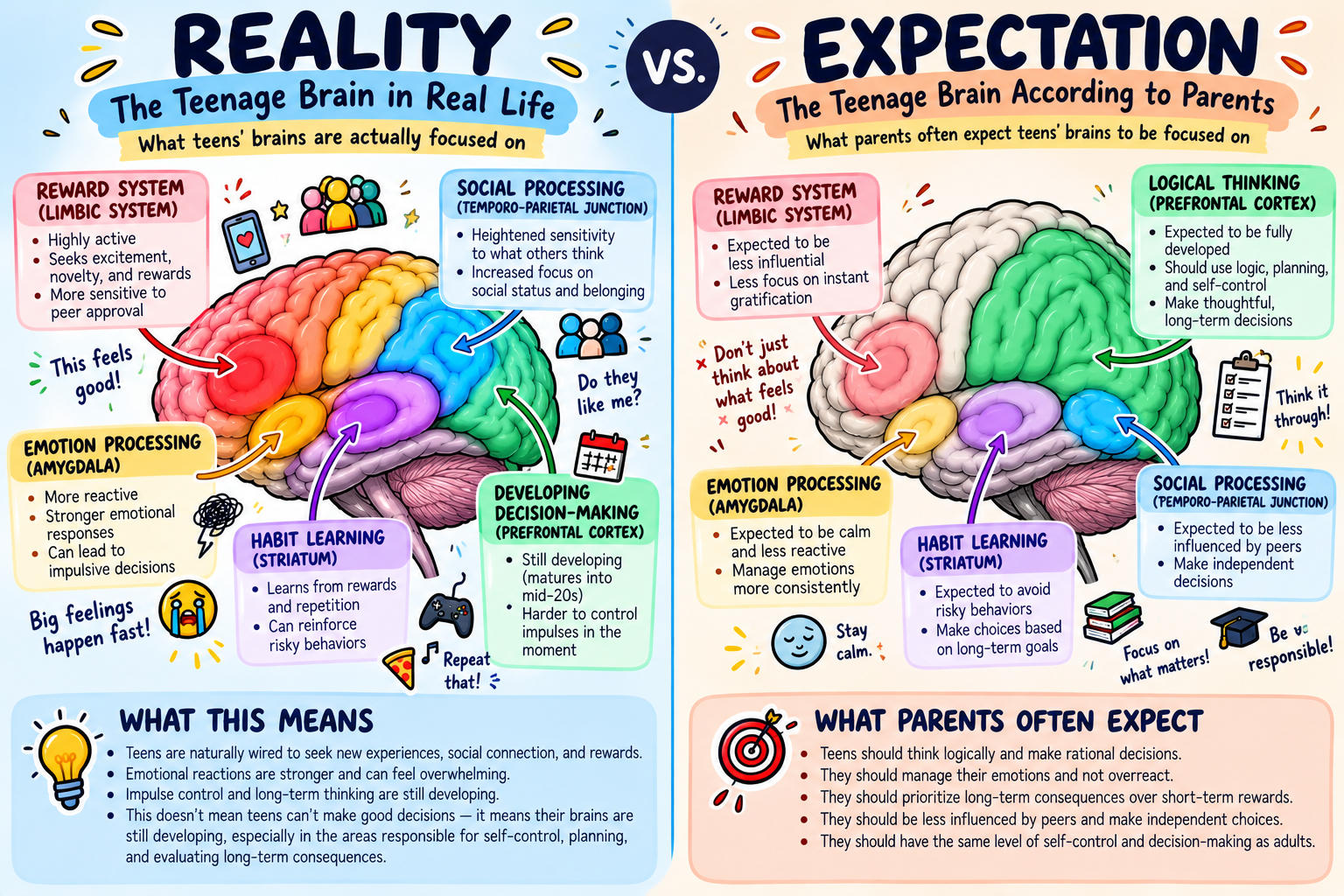
Parents often have expectations for how teens should think, respond, and behave, sometimes forgetting that their brains are still developing. Areas responsible for emotional regulation, decision-making, logical thinking, and reward-seeking are still maturing throughout adolescence. Understanding the difference between what we expect and what is developmentally realistic can help us approach teens with greater patience, empathy, and realistic expectations.
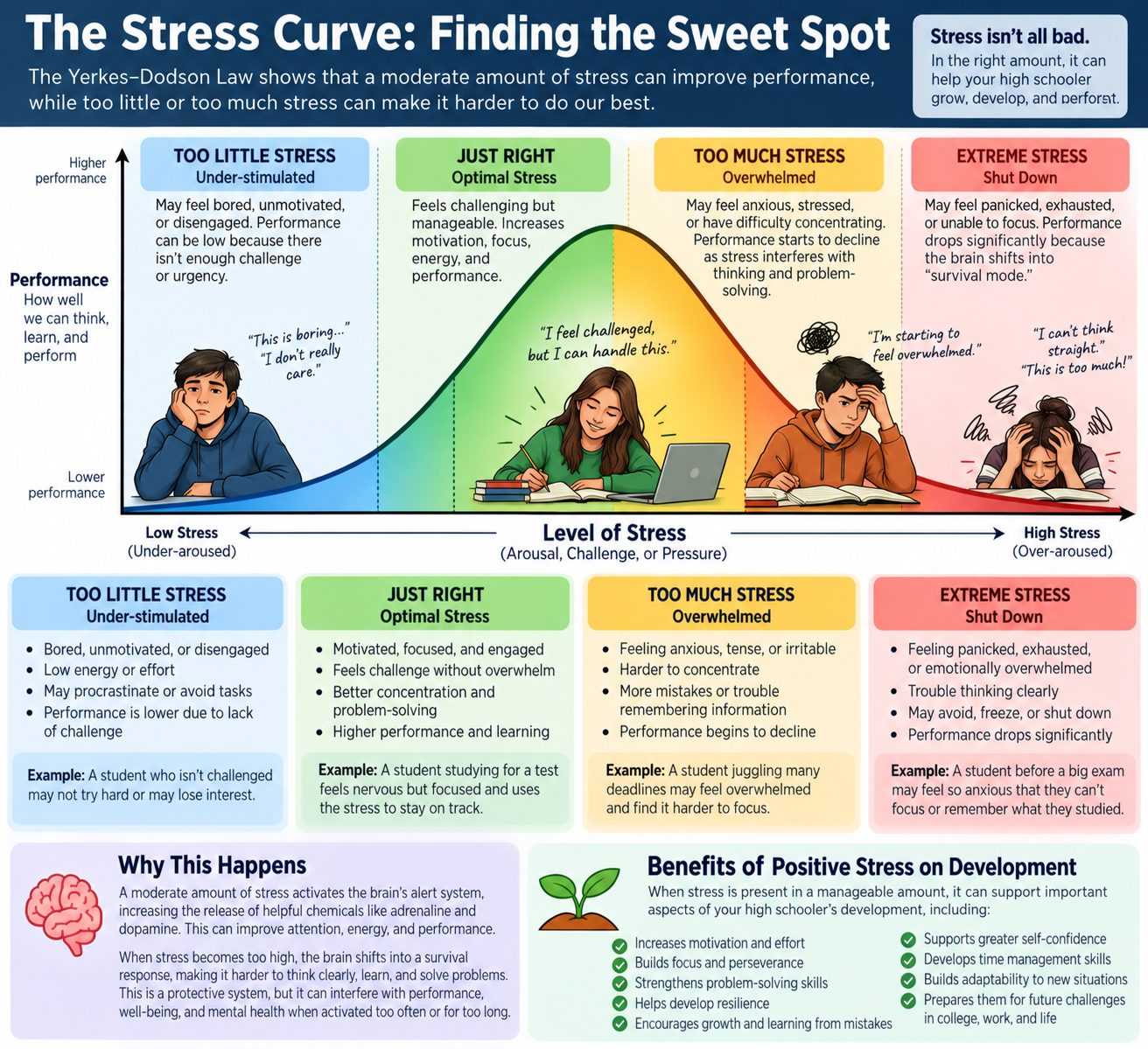
Not all stress is bad! While we often think of stress as something to avoid, a healthy amount of stress is actually an important part of growth and development. Good stress can help teens build resilience, develop problem-solving skills, and learn to navigate challenges. However, when stress becomes overwhelming, persistent, or begins interfering with daily life, it may be a sign of anxiety. Understanding the difference between healthy stress and unhealthy stress can help parents recognize when to encourage their teens through challenges and when they may need additional support.
